The history of Domaine de la Galinière begins in Roman times.
After assisting the Massaliote colonies in defending their territory against a Celto-Ligurian alliance, the Romans also turned their attention to the region. Shortly thereafter, in 128 BC, the consul Sextius Calvinus settled in what is now Aix-en-Provence.
At that time, La Galinière lay along the Via Aurelia, today’s National Road 7, the backbone of the Roman province and a major route used by Romans traveling to Antibes or the province of Narbonensis. Even then, La Galinière held strategic importance, as a fortified post had been established there.
One possible origin of the name La Galinière dates back to this period. One of the Roman lieutenants stationed there was reportedly named Galius, and due to his dark complexion, he was nicknamed Galus Niger, from which the name Galinière may have derived.
A second hypothesis attributes the name to a poultry farm that supplied King René with eggs for his omelets. In Provençal, a hen is called galinié.
Very few documents remain from the Early Middle Ages. One now-untraceable work mentions the discovery at La Galinière of a lead coffin bearing an identification plaque, while another refers to a marble sarcophagus decorated with carvings from the same site. These funerary objects were reportedly transported to Arles, possibly to the Alyscamps, in the 16th century.
According to cadastral records, La Galinière was divided into six parcels: La Galinière-Château, Cengle de la Galinière, La Galinière-Auberge, La Gavotte, Thonelle, and Gorgue-Madame. A deed dated 1478 mentions, in the hillside district, a bastide known as Antonnelle, which likely later became Thonelle.
The history of La Galinière-Auberge is more precisely documented. Built around a well circa 1200, this roadside building was owned in 1306 by the Knights Templar, who held forty éminées of land surrounding it before the property was annexed to the domain of King Charles II. Several owners followed, including Guillaume de Rousset, and in 1537, commissioners of Francis I sold the jurisdiction of La Galinière to Antoine Gaufredi, who became lord of the estate. His son-in-law Jean de Garnier, followed by his descendants Marc-Antoine and Louis, succeeded him as lords of La Galinière.
In the 18th century, part of the La Galinière-Auberge building, constructed in 1664, housed a tavern known as Tivoli. However, it was only in 1772 that the horse post relay became a regularly operated establishment of some renown. Popular with travelers, it was mentioned in contemporary travel guides. Legend, however, paints a darker picture: travelers stopping there were allegedly robbed by bandits well informed about their wealth, who then escaped through secret paths in the Cengle, impossible to follow without local knowledge.
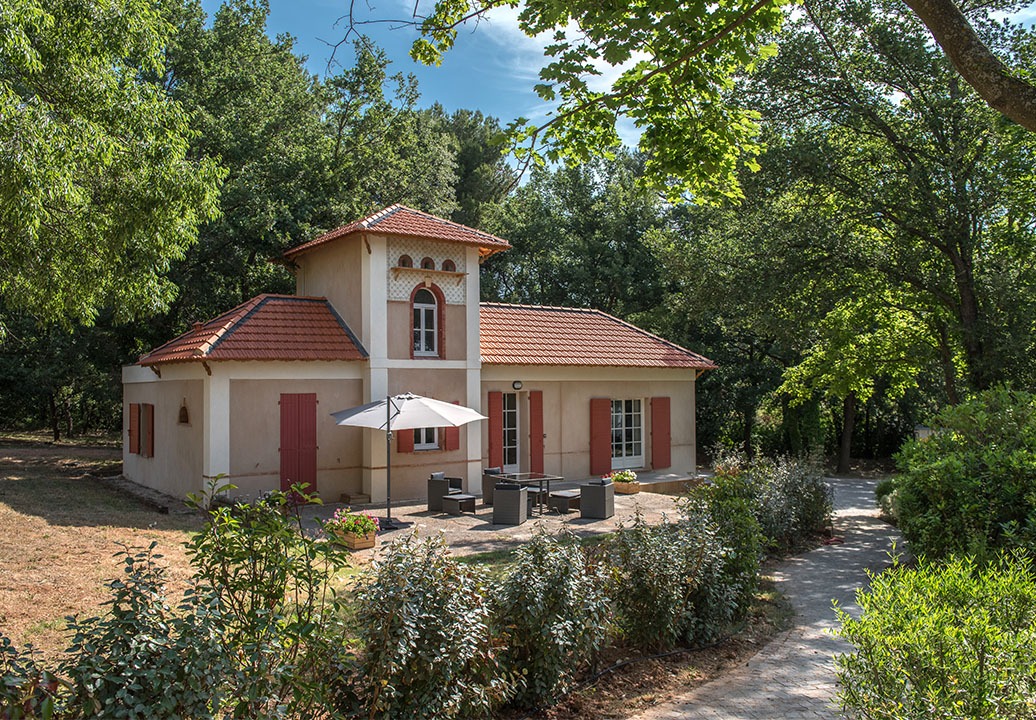
The history of Château de la Galinière begins around this time, in 1733, as indicated on the entrance door of the bastide. Pierre-François de Bonaud, Knight of the Military Order of Saint Louis and cavalry captain in the Luzignan regiment, acquired the property. His descendants, royal court auditors, built, restored, and expanded the château into its current form.
A notable stopover during the First Empire, the postal relay hosted Pope Pius VII. After being imprisoned by Napoleon I in 1809, the Pope was escorted to Fontainebleau and stopped under guard at the relay. He stayed there again on his return to Italy, this time as a free man. A plaque commemorating his passage is displayed in the chapel of Domaine de la Galinière.
On December 2, 1817, La Galinière was purchased by Claude-Joseph Comte, a merchant from Aix-en-Provence. Deeply invested in enhancing the estate, he significantly expanded it.
In 1890, his great-granddaughter Anne-Marie Durant inherited the domain. That same year, she married Jean-Baptiste Badetty, and in 1895, they welcomed their only daughter, Mathilde.
Under the couple’s stewardship, the estate flourished agriculturally: cereals and vineyards shared the land, cultivated by two farming families. One based at La Gavotte and the other at the Auberge. Sadly, this growth was shattered by the First World War. Jean-Baptiste Badetty enlisted and returned after the war, decorated with the Legion of Honor and the Croix de Guerre, only to bury his 23-year-old daughter, who had fallen victim to the Spanish flu.
This tragic loss profoundly affected the château grounds. Wishing to keep their daughter close, yet unable to bury her in the former chapel built in 1752 inside the house, the parents constructed the current chapel in 1919, where Mathilde was laid to rest, allowing them to pray for her day and night.
The chapel was consecrated under the title of the Nativity of the Blessed Virgin Mary. After this loss and his years in the army, Badetty became deeply driven by a desire to serve. He was elected Mayor of Châteauneuf-le-Rouge in 1919 and held the position until his death in 1939.
Despite the hardships caused by war and occupation, the Badetty family’s successors preserved La Galinière. The vineyard was maintained and gradually replanted, Roman water conduits restored, fields cultivated, and a lifesaving farmyard sustained the estate during the conflict, later reduced due to labor shortages. These efforts allowed the château to endure this difficult period with limited damage.
After serving as the residence of prominent families, the estate became a convalescent home from 1957 to 1983, before being taken over by two antique dealers from Aix-en-Provence. Well known and deeply cultured, they devoted their energy to breathing new life into La Galinière. Despite the death of one of them, restoration work continued, as did the expansion of the vineyard, which had begun earlier under the guidance of René Bonnaventure, a renowned nurseryman.